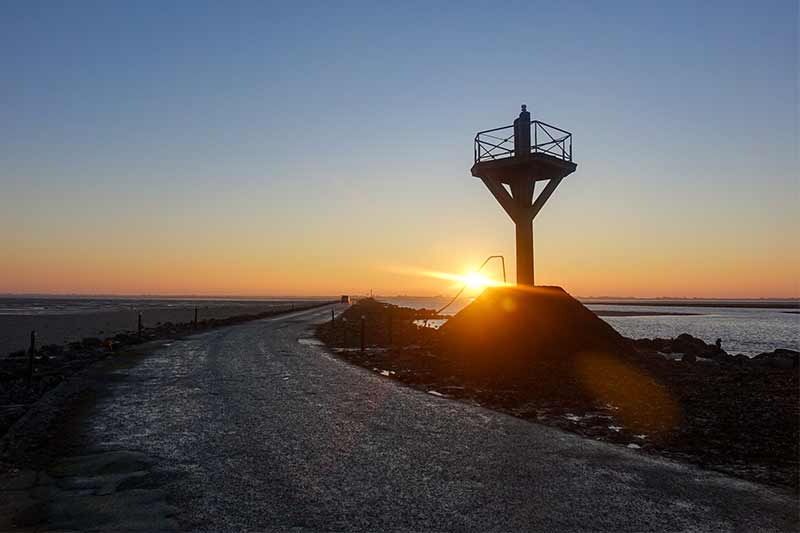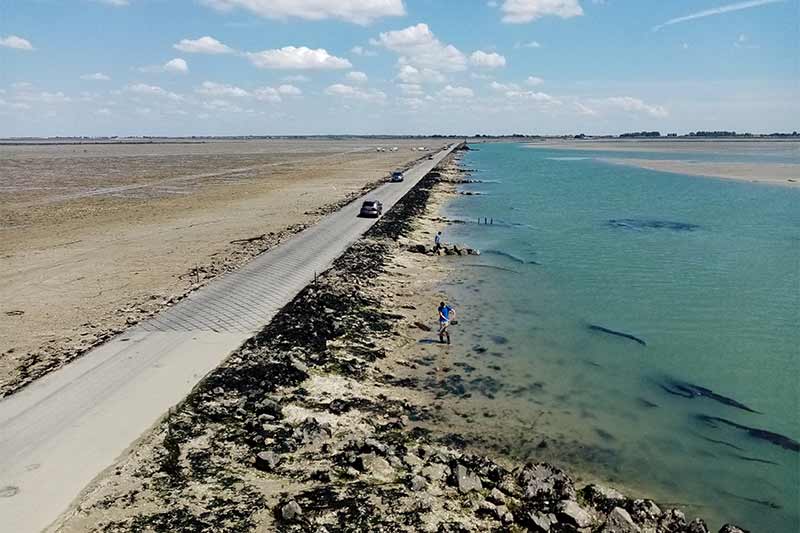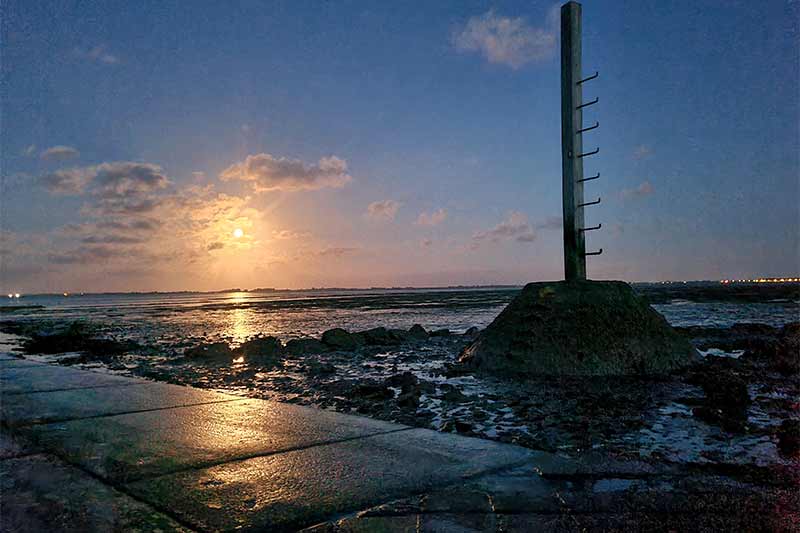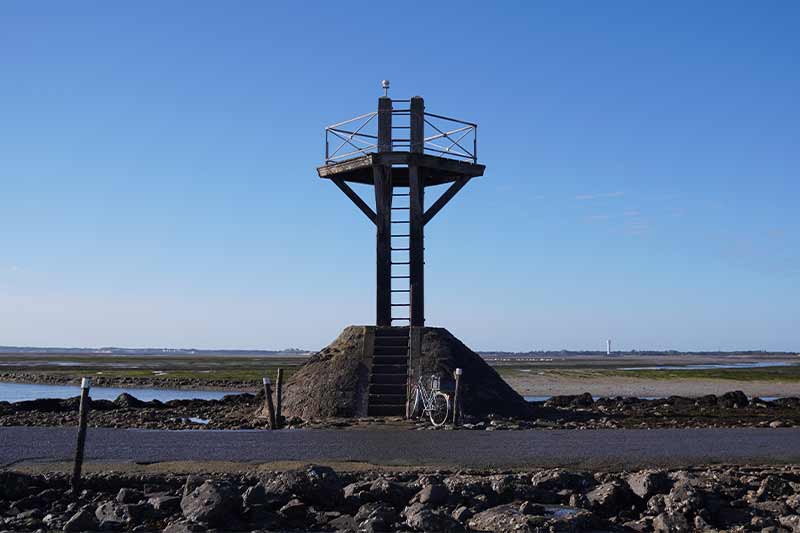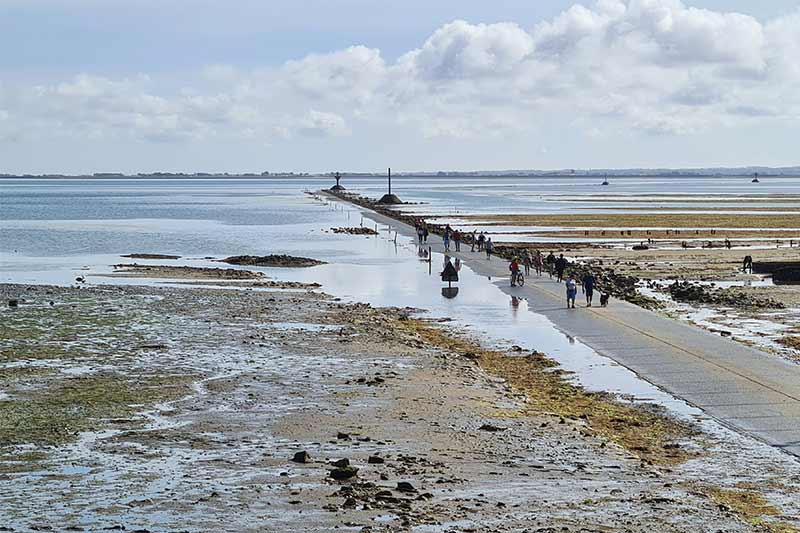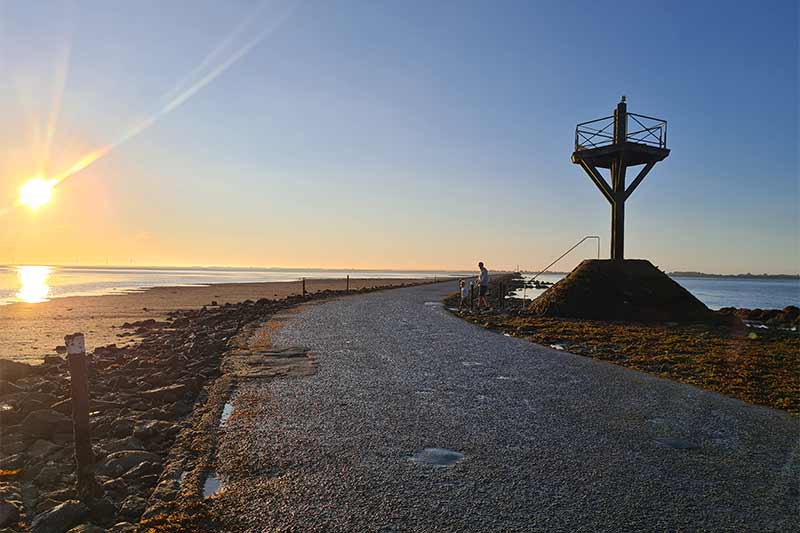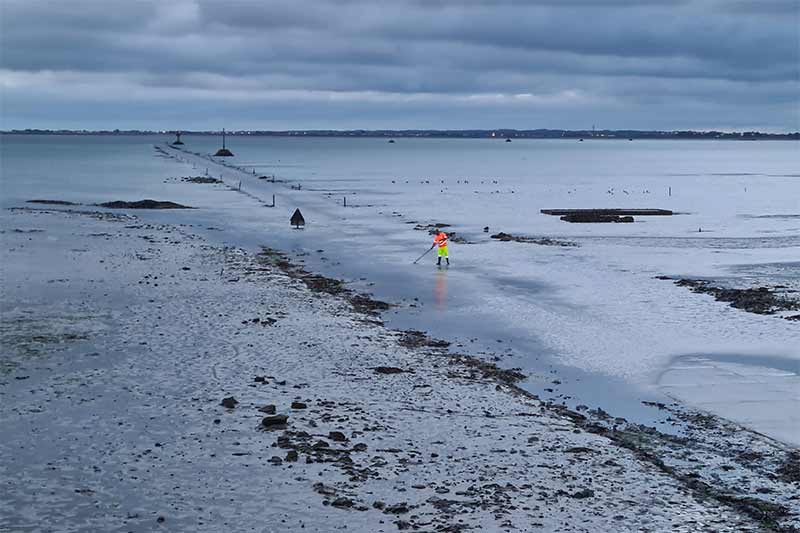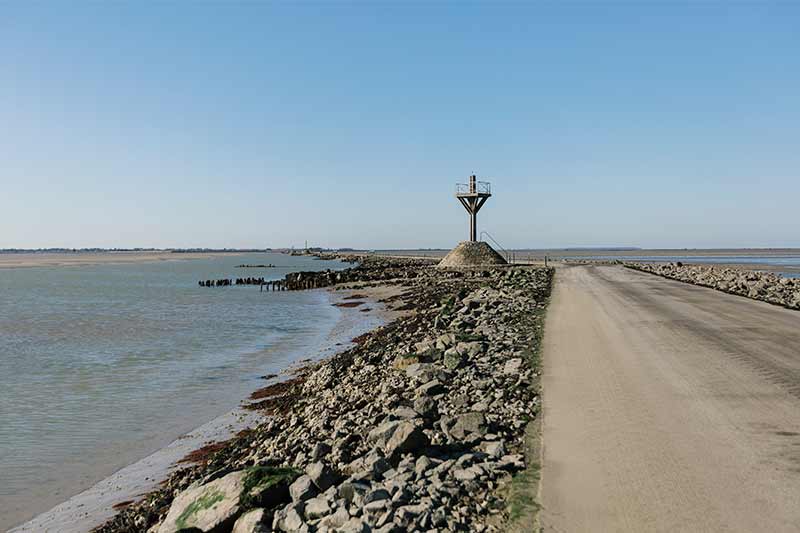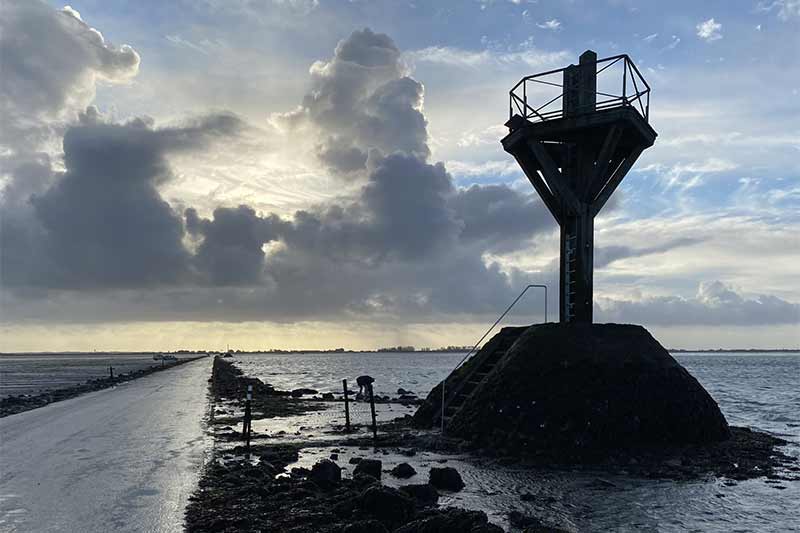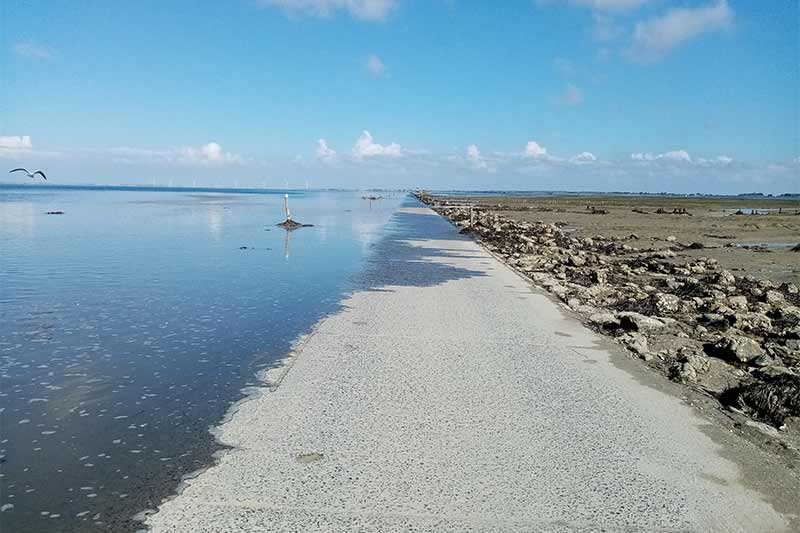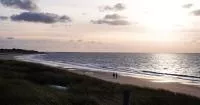


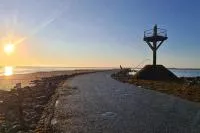
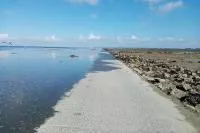
“The 4.2 km of completely waterlogged paved road finally reopened. A flood of shellfish diggers immediately set to work, hunting down cockles and clams. The road stands out against the astoundingly simple landscape, so beautiful and so peaceful. I really appreciate this unique place between two worlds, not really on the continent but not yet on the island.”
The Gois hasn’t always been there. It was created by two currents linking up with large quantities of sand and silt deposited during times of slack water.
Key dates to remember:
- 1701: First mention on a map of a route connecting the island to the mainland.
- 1766: Auguste Gauvrit, from Barbâtre, makes the first recorded crossing of the Gois.
- 1780: The first markers are installed along the route. These are simple posts, unable to withstand harsh weather and strong sea currents. Eight years later, during the winter of 1788–1789, they are swept away by ice.
- 1840: A regular horse-drawn carriage service begins operating.
- 1872: The first stones are laid along the causeway.
- 1898: With the arrival of the railway line at Fromentine, connecting it to Challans, the ferry service becomes increasingly popular, while the Passage du Gois gradually falls into disuse.
- 1935: Work begins on paving the causeway and continues until 1939.
- 1942: The Passage du Gois is added to the departmental list of protected sites.
- 1993: The Tour de France cycling race crosses the Passage du Gois for the first time.
- 2017: The Passage du Gois is granted national heritage site status.